With the key selection factors in mind, homeowners can now explore the stone options available for their kitchen projects.
Engineered Quartz – The Low-Maintenance Modern Solution
Engineered quartz has revolutionized the countertop industry by combining natural quartz crystals with resins and pigments to create non-porous, highly consistent surfaces. This manufactured stone has become the go-to choice for many homeowners seeking the best stone for kitchen countertops without high maintenance requirements.
Unmatched Consistency and Customization
Engineered quartz offers consistent coloration and patterning, unlike natural stones with unpredictable patterns. This allows homeowners to match samples to finished products perfectly and creates harmonious transitions between slabs. Modern manufacturing techniques can produce quartz, mimicking natural marble, concrete, or solid colors, providing unprecedented design flexibility.
Non-Porous Performance Advantages
Thanks to its non-porous composition, quartz requires no sealing. This makes it highly resistant to staining from wine, oils, and acids that plague many natural stones. Quartz often emerges as the ideal option for busy households seeking low-maintenance solutions.
Heat Consideration Cautions
Despite its numerous advantages, quartz does have limitations. Most notably, it cannot match natural stone’s heat resistance. Direct contact with hot pots and pans can cause damage, necessitating the consistent use of trivets and hot pads in quartz-equipped kitchens.
Granite – Natural Beauty Meets Proven Durability
Granite is a natural igneous rock formed under intense pressure and delivers exceptional hardness and heat resistance. For decades, it has remained the benchmark against which other countertop materials are measured, offering a compelling combination of performance and aesthetics.
Timeless Appeal of Natural Formations
Each granite slab represents millions of years of geological processes, creating unique patterns that are impossible to replicate artificially. This one-of-a-kind quality appeals to homeowners seeking distinctive character in their kitchens. Available in hundreds of color variations from subtle whites to dramatic blacks, granite complements virtually any design style.
Exceptional Durability for Active Kitchens
Few materials match granite’s resistance to scratching, heat, and daily wear. Granite countertops routinely last for decades without significant damage when properly sealed and maintained. For households where cooking activities dominate, granite often proves the best type of stone for kitchen countertops.
Maintenance Requirements
While less demanding than marble, granite still requires periodic sealing to maintain its stain resistance. Most installations need resealing every 1-3 years, depending on use patterns and specific stone composition. Homeowners should consider this ongoing maintenance when evaluating granite against engineered alternatives.
Marble and Quartzite – Luxury Options for Discerning Homeowners
For those prioritizing timeless elegance over maintenance convenience, marble, and quartzite offer compelling options with distinctive characters.
Marble Elegance with Maintenance Considerations
Few materials match marble’s classic beauty and luxurious appearance. Its distinctive veining patterns have graced high-end homes for centuries, creating instantly recognizable elegance. However, marble’s calcium carbonate composition makes it vulnerable to etching from acidic substances like lemon juice and tomato sauce – a significant consideration for kitchen applications.
Living Patina Development
Unlike many countertop materials designed to remain unchanged, marble develops a patina over time, reflecting its use history. Some homeowners embrace this evolution as part of marble’s character and charm, while others prefer materials that remain pristine indefinitely.
Ideal Applications
Given its maintenance demands, marble often serves specific roles in kitchen designs rather than covering all countertop surfaces. Many homeowners reserve marble for baking centers, decorative islands, or less-used perimeter sections while choosing more durable materials for primary work zones.
Quartzite Performance with Marble Aesthetics
Often confused with similarly-named quartz, quartzite is a natural metamorphic stone formed when sandstone undergoes intense heat and pressure. This creates a material with a marble-like appearance but significantly improved durability, making it one of the most desirable options for discerning homeowners seeking the best natural stone for kitchen countertops.
Superior Hardness and Durability
Quartzite ranks among the most complex natural stone options, often exceeding granite in scratch resistance. This exceptional durability allows it to maintain its beauty even in busy kitchens with heavy use.
Limited Availability and Premium Pricing
Quartzite’s combination of beauty and performance comes at a premium price point, often exceeding both granite and quartz. Limited quarry availability also means more significant color restrictions than other stone options, though its distinctive patterns make each installation unique.
Specialty Stones – Soapstone, Limestone, and Dolomite
Beyond the mainstream options, several specialty stones offer distinctive characteristics for homeowners seeking unique kitchen personalities.
Soapstone for Distinctive Character
Soapstone is composed primarily of talc and magnesium and delivers a distinctive matte appearance, unlike any other countertop material. Its soft, touchable texture and ability to develop a rich patina over time appeal to homeowners seeking authentic, lived-in kitchen environments.
Non-Porous Advantages
Unlike most natural stones, soapstone’s dense composition creates a naturally non-porous surface that is resistant to staining without sealing. This offers maintenance advantages for homeowners concerned about food safety and stain vulnerability.
Scratch Considerations
While resistant to heat and chemicals, soapstone’s relative softness makes it more vulnerable to scratching than harder stones. However, minor scratches can often be removed with simple sanding or mineral oil applications, making repairs accessible for homeowners.
Limestone and Travertine for Warm, Earthy Aesthetics
Limestone and travertine offer warm, earthy tones and distinctive textures for rustic, old-world kitchen designs. These sedimentary stones bring unique character to kitchen environments, though their porosity and softness require thoughtful application.
Specialized Applications
Given their vulnerability to acids and scratching, these softer stones work best in less-used areas or homes where their natural aging process is embraced as part of their charm. Proper sealing and careful use remain essential for maintaining their beauty.
Design Compatibility
Limestone and travertine excel in Mediterranean, French country, and rustic design schemes where their warm, weathered appearances complement traditional styling elements. Their subtle coloration provides excellent coordination with various wood tones and metallic accents.
Dolomite for Marble Aesthetics with Improved Performance
As homeowners seek which stone is best for kitchen countertops, with marble aesthetics but improved durability, dolomite has emerged as a compelling middle-ground option. This lesser-known natural stone offers visual characteristics similar to marble with moderately enhanced performance metrics.
Distinctive Veining Patterns
Dolomite’s crystalline structure creates beautiful veining patterns reminiscent of high-end marble varieties. Its lighter background with pronounced veining makes it suitable for contemporary and transitional kitchen designs.
Balanced Performance Profile
While more resistant to etching than marble, dolomite still requires more excellent care than granite or quartzite. Homeowners choosing Dolomite should approach it as a premium aesthetic rather than a maintenance-free solution, understanding its specific care requirements.

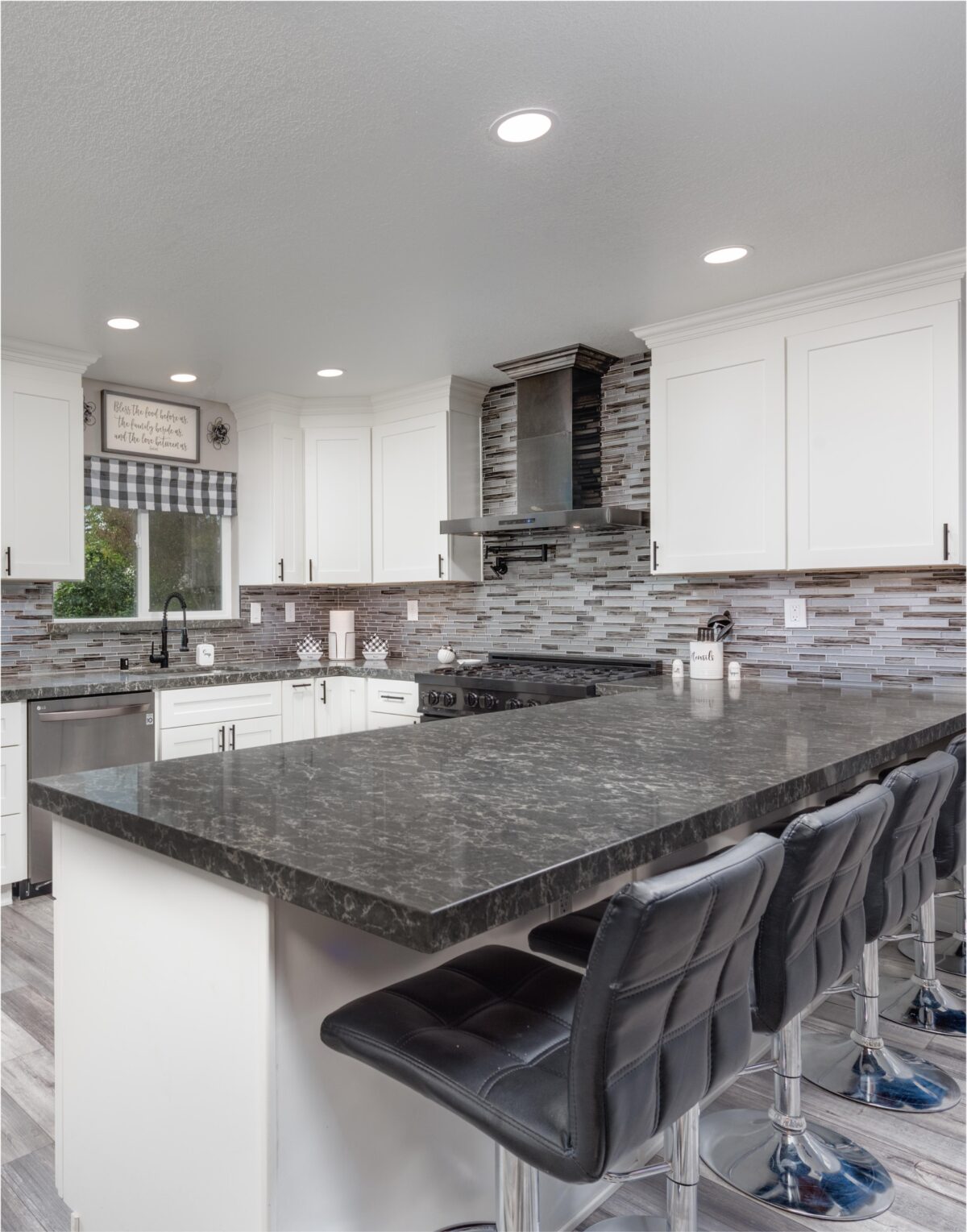 8 Types of Natural Stone Countertops
 What’s the Difference Between Prefab Countertops and Slab Countertops?
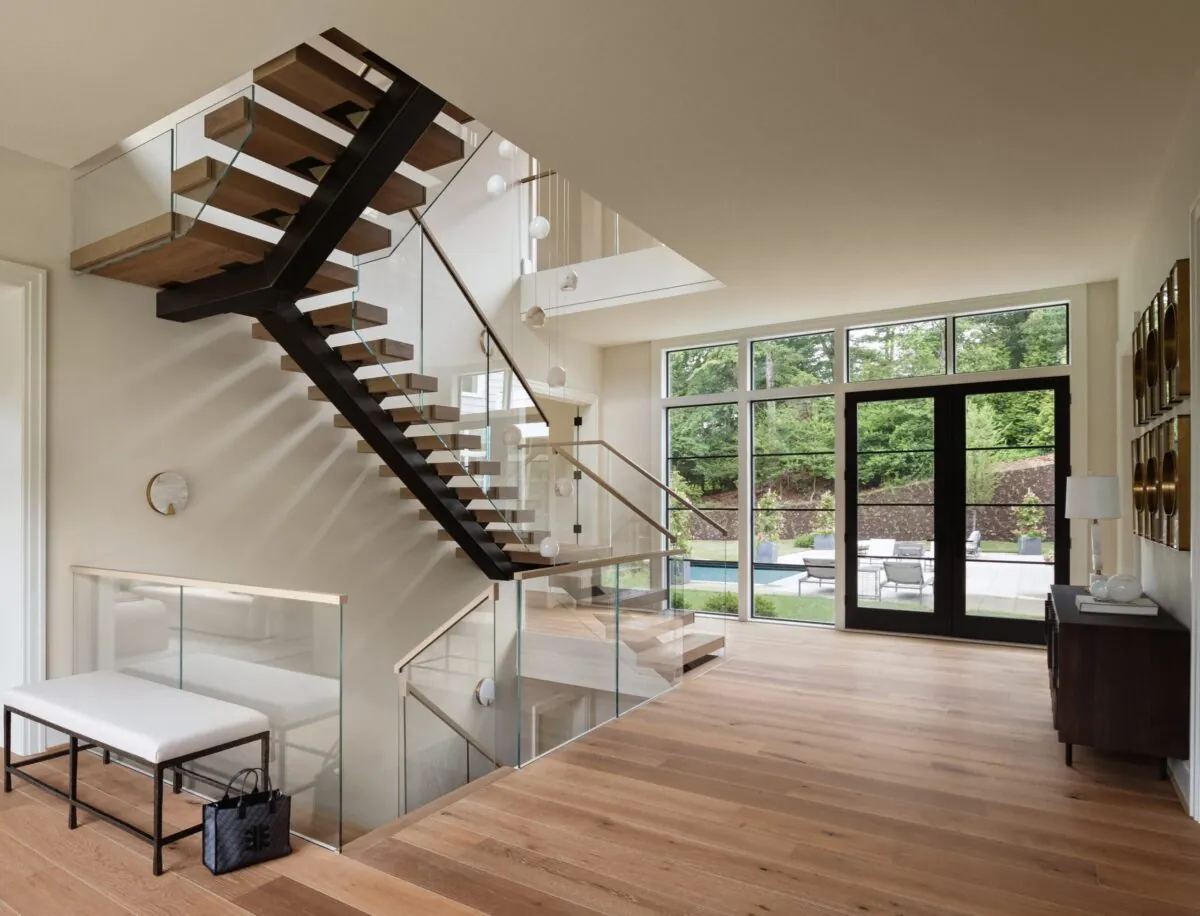 Floating Stairs: Modern, Contemporary Design for Sacramento Homes
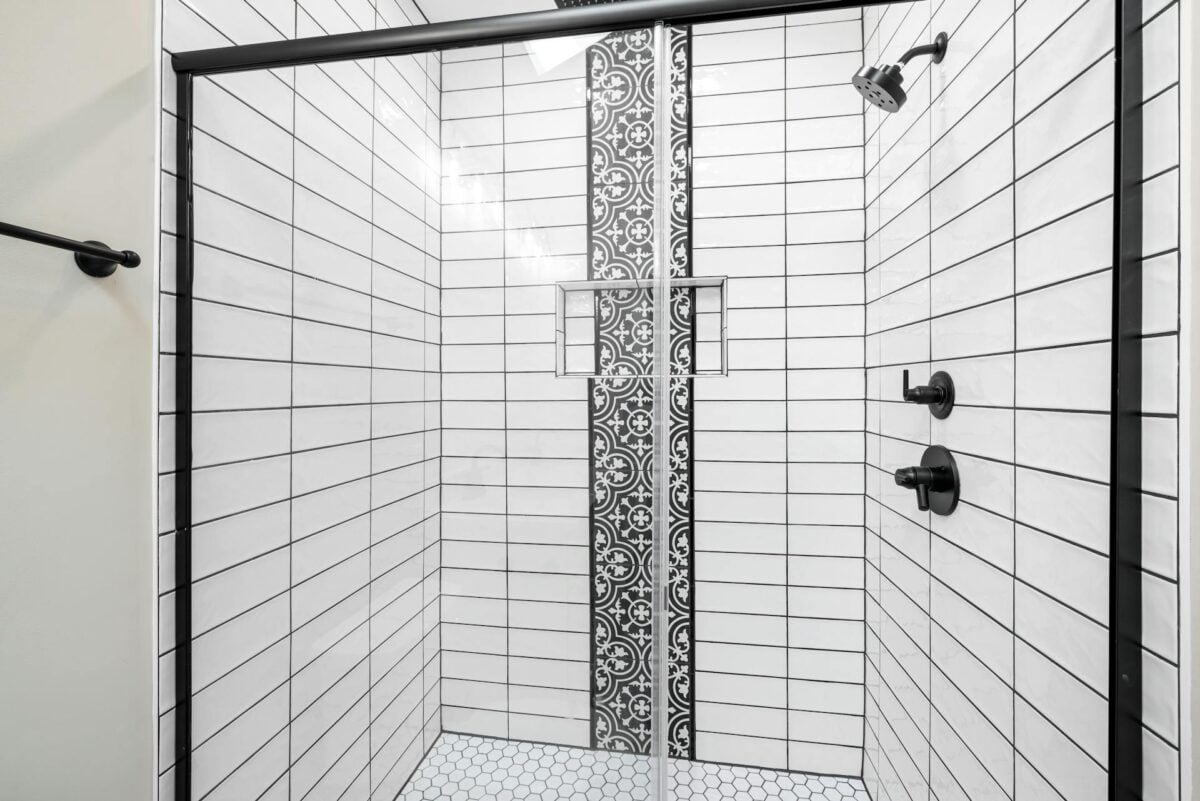 Types of Shower Doors: Pros and Cons
 How Much Does it Cost to Build an ADU in Sacramento?
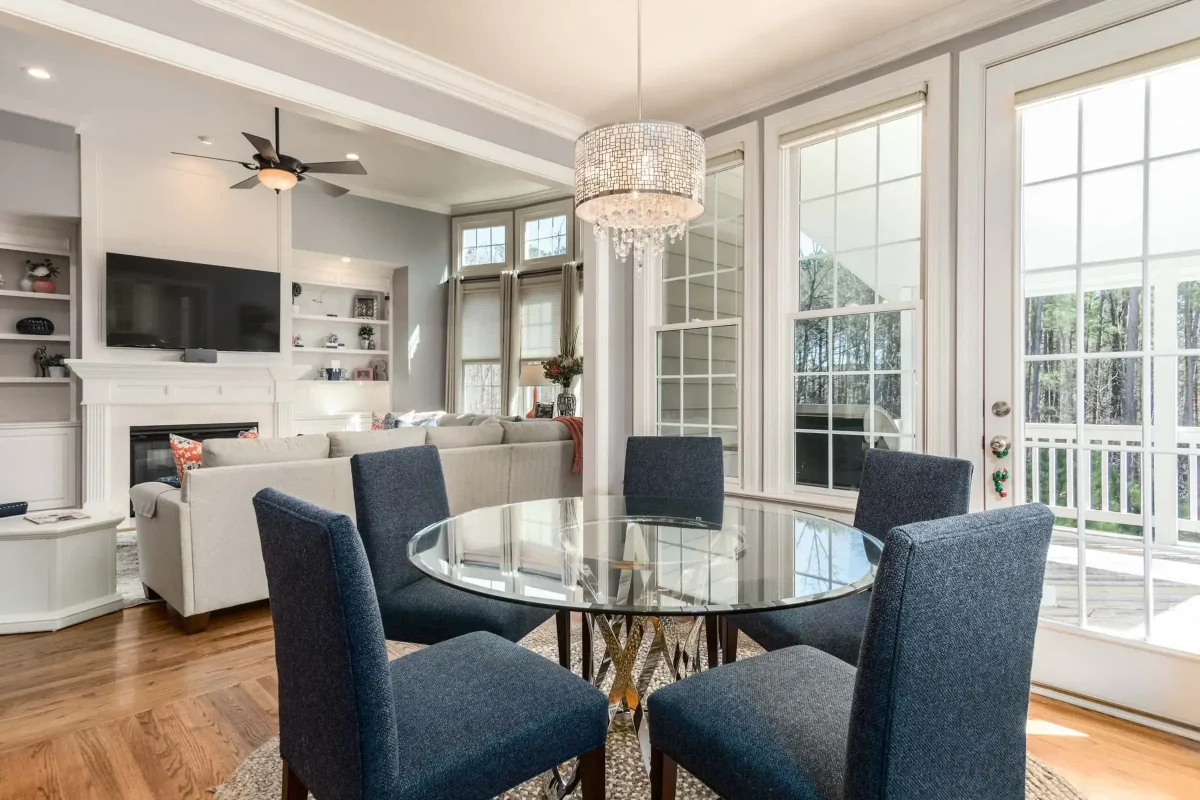 Home Window Replacement Cost in Sacramento (2026)
 What is the 30% Rule in Home Renovation & Remodeling?
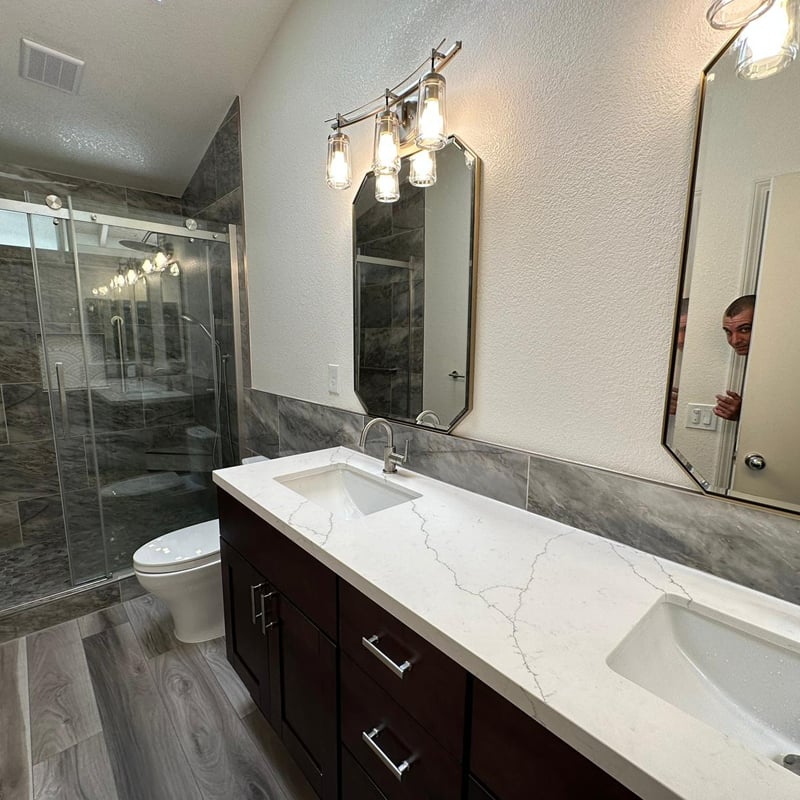 What To Expect When Remodeling Your Bathroom
 Top Kitchen Trends for 2026: What’s Hot in the Latest Kitchen Remodels
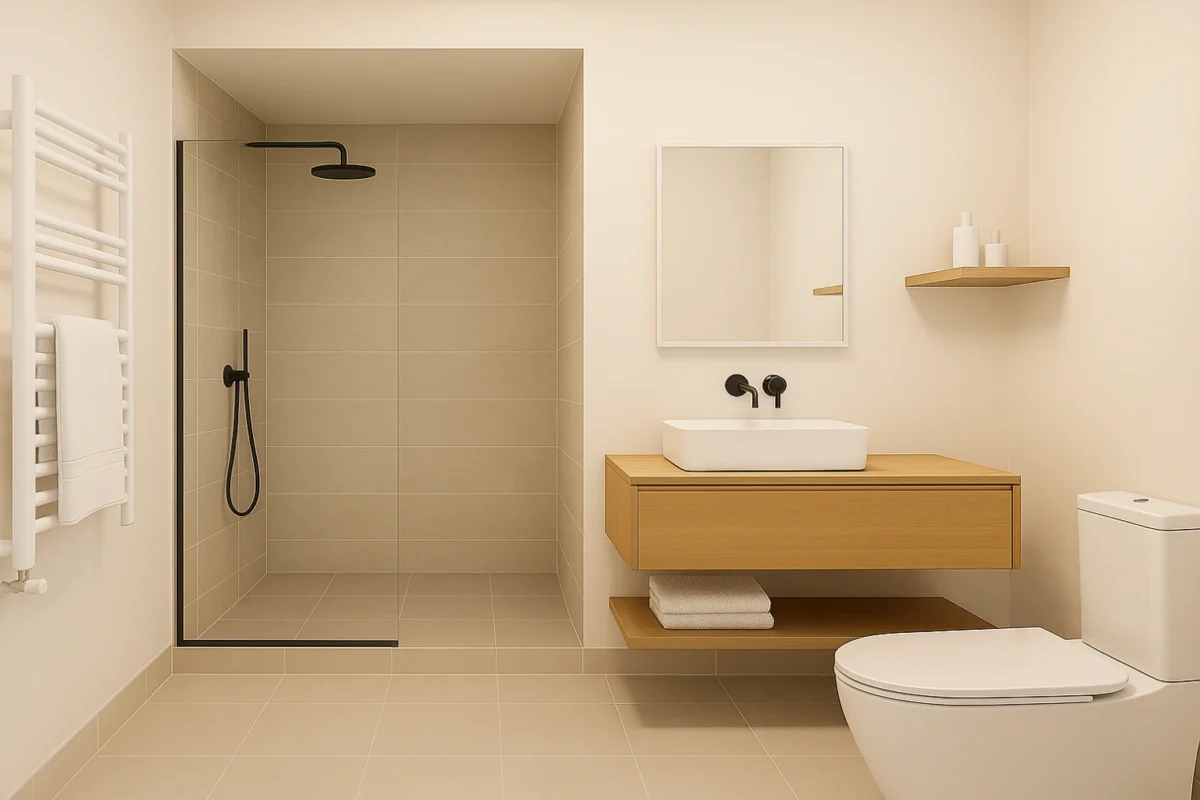 Doorless Walk-In Shower Ideas for Small Bathrooms
 Best Underlayment Options for Vinyl Flooring in a Basement – What You Really Need to Know
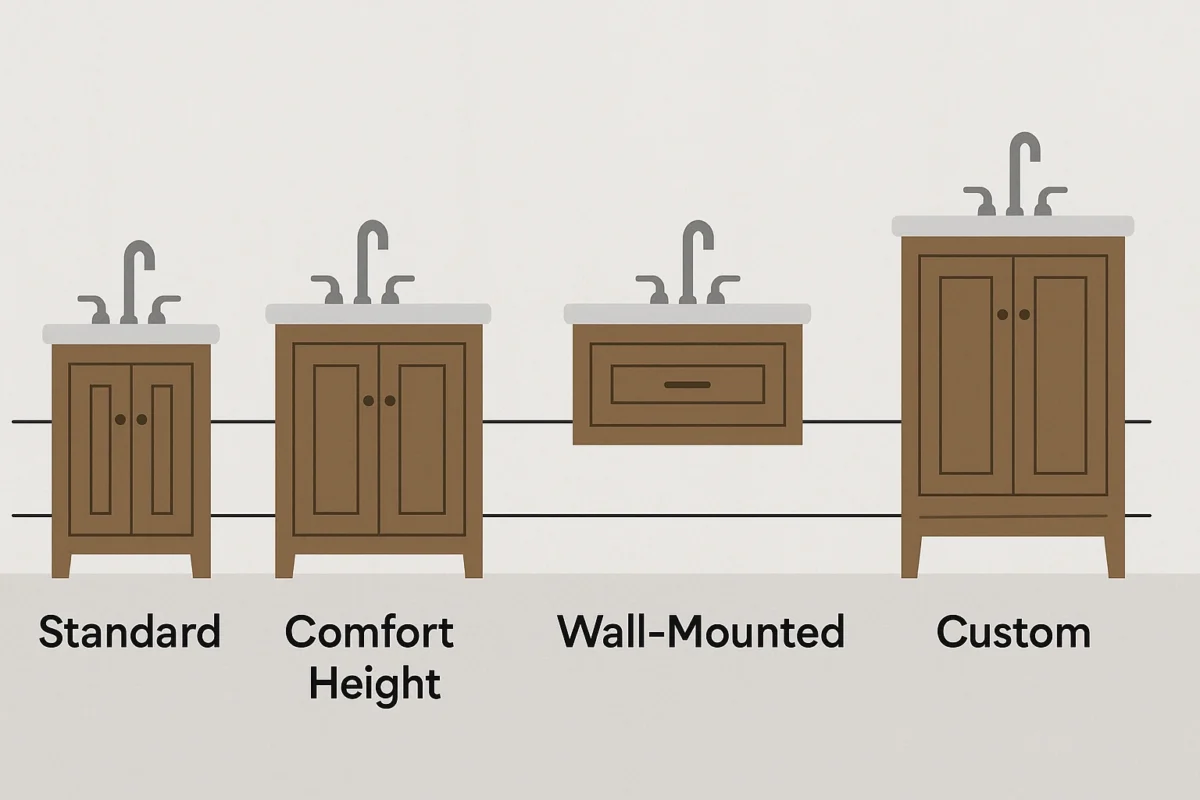 Bathroom Vanity Height Guide: Standard, Comfort, and Custom Options Explained
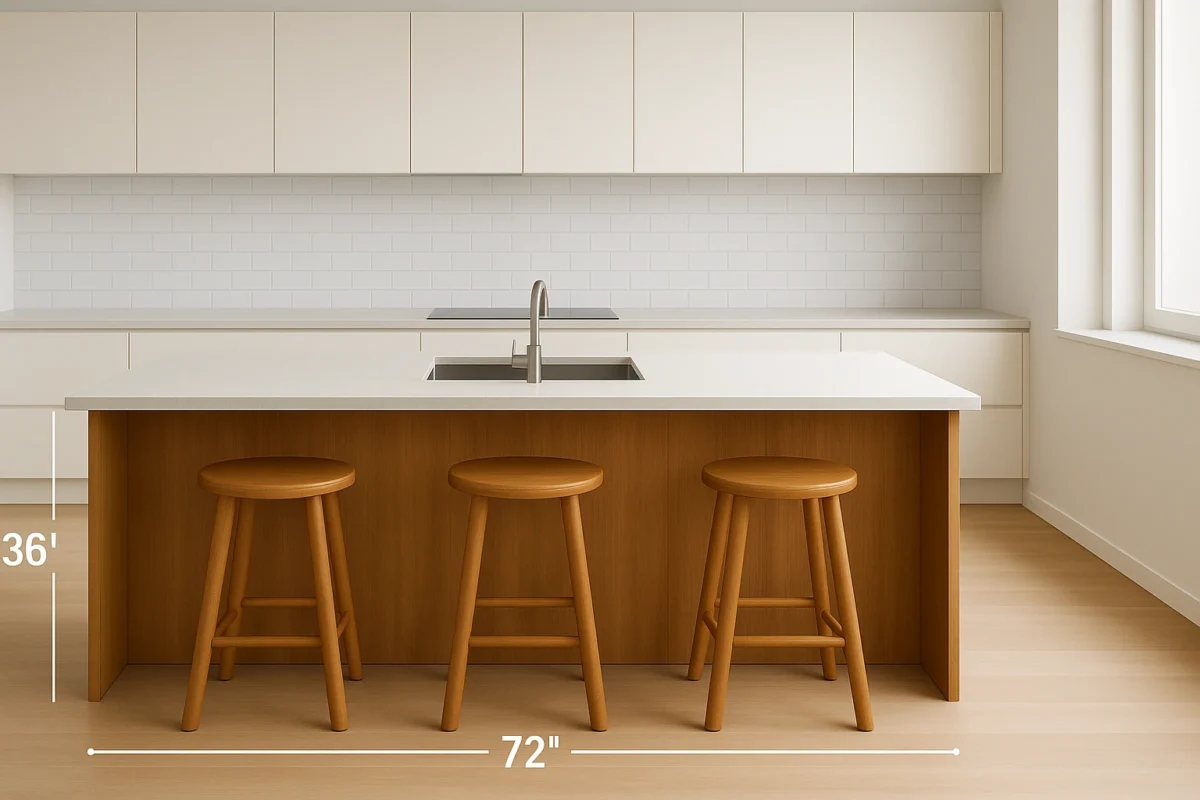 Average Kitchen Island Height and Dimensions: What You Need to Know Before Planning Your Remodel
 What’s The Most Expensive Part Of A Bathroom Remodel?
 Do You Need a Permit to Remodel a Bathroom? Expert Guide
 How to Remodel a Bathroom with a Window in the Shower – Professional Solutions

